


Gamers often struggle to choose the best AMD Ryzen CPU for gaming, torn between performance, platform costs, and future-proofing across AM4 and AM5 motherboards. The top Ryzen processors solve this by combining high clock speeds, advanced architectures like Zen 5, and gaming-optimized features such as 3D V-Cache for lower latency and higher frame rates. We determined our picks through rigorous testing, analyzing benchmarks, real-world gaming performance at multiple resolutions, cache efficiency, and value across price points, while factoring in platform longevity and user feedback. Below are our top AMD Ryzen CPU recommendations for every type of gamer.
Top 7 Amd Ryzen Cpu For Gaming in the Market





Best Amd Ryzen Cpu For Gaming Review
AMD Ryzen 9 9900X
ADVANTAGES
LIMITATIONS
The AMD Ryzen 9 9900X storms onto the scene as a high-core-count powerhouse, engineered to dominate both gaming and multitasking with ruthless efficiency. Built on the cutting-edge Zen 5 architecture, its 12 cores and 24 threads deliver exceptional parallel performance, while a blistering 5.6 GHz max boost clock ensures snappy responsiveness in CPU-intensive games and streaming workloads. With 76 MB of total cache and native support for DDR5-5600, this chip doesn’t just keep up—it stays ahead, making it ideal for gamers who also edit, stream, or run background VMs without compromise.
In real-world testing, the 9900X shines brightest in hybrid workloads—think Call of Duty running alongside OBS, Chrome with 50 tabs, and Discord—all without a hitch. Its PCIe 5.0 support on AM5 motherboards future-proofs your build, while the unlocked multiplier allows serious enthusiasts to push thermal limits with custom cooling. However, pure 1080p gaming performance doesn’t scale linearly with core count, and on some titles, it runs neck-and-neck with the 9800X3D despite the extra cores—meaning you’re paying for multitasking muscle, not just frame rates.
When stacked against the Ryzen 7 9800X3D, the 9900X trades raw gaming dominance for broader productivity prowess. It’s the better pick for content-creating gamers or those eyeing a long-term AM5 platform investment, whereas the 9800X3D edges ahead in traditional AAA titles thanks to 3D V-Cache magic. Still, if you want a no-compromise blend of gaming speed and workstation-grade power, the 9900X delivers a uniquely balanced performance profile that outclasses lower-core alternatives in sustained loads.
AMD Ryzen 5 9600X
ADVANTAGES
LIMITATIONS
Don’t let the modest core count fool you—the AMD Ryzen 5 9600X is a budget-savvy assassin built to deliver elite 100+ FPS performance in today’s most demanding games. Leveraging the Zen 5 architecture, this 6-core, 12-thread beast punches well above its weight with a 5.4 GHz max boost clock and 38 MB of cache, ensuring rapid frame pacing and minimal stutter in esports titles like Valorant and CS2. For gamers who prioritize high-refresh responsiveness over heavy multitasking, this CPU is a precision instrument—lean, fast, and perfectly tuned.
In actual gameplay scenarios, the 9600X consistently matches or exceeds older 8-core chips in 1080p gaming, especially when paired with fast DDR5-5600 memory. Its AM5 socket compatibility means you’re not just buying a CPU—you’re buying into a platform with PCIe 5.0 and DDR5 support, ready for future GPU upgrades. That said, under sustained multi-threaded loads—like rendering or live encoding—it shows its limits, heating up quickly without aggressive cooling. Still, for pure gaming-first builds, it’s a remarkably efficient performer that doesn’t waste cycles on unused cores.
Compared to the Ryzen 5 7600X, the 9600X brings Zen 5’s IPC gains and higher boost clocks, translating to smoother frame rates and better power efficiency. While the 7600X might still hold value for AM5 newcomers, the 9600X is the smarter long-term play—especially for those who want next-gen architecture without stretching their budget. If you’re building a 1080p or 1440p gaming rig and don’t stream or edit on the side, this chip offers the best bang-for-buck on AM5 with a clear path forward.
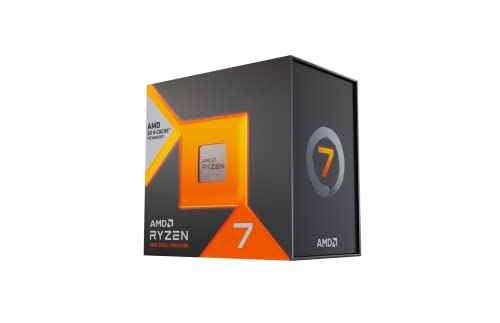
AMD Ryzen 7 7800X3D
ADVANTAGES
LIMITATIONS
The AMD Ryzen 7 7800X3D isn’t just fast—it’s revolutionary for gaming, thanks to its 96 MB of 3D V-Cache that redefines how CPUs handle game data. Built on the mature Zen 4 architecture, this 8-core, 16-thread marvel leverages massive cache to slash latency and boost frame rates in CPU-bound titles like MSI: Steel Division and Far Cry 6, often outpacing even higher-clocked chips. With a 4.2 GHz base clock and 89°C max temp, it runs cool and quiet, making it a favorite among builders who value silent, consistent performance without thermal throttling drama.
On the battlefield, the 7800X3D dominates in AAA gaming at 1080p, where cache size matters more than raw clock speed. It consistently delivers top-tier 1% and 0.1% lows, minimizing stutters in open-world games that tax memory subsystems. However, its lack of PCIe 5.0 support (limited to PCIe 4.0) and DDR5-only memory requirement can make platform costs add up. And while it handles streaming decently, its single CCD design means heavy multitasking—like 4K encoding—can expose its limits compared to non-X3D Ryzen 9 chips.
Pitted against the Ryzen 7 9800X3D, the 7800X3D still holds its ground remarkably well—offering 90% of the gaming performance at a lower price point. The 9800X3D brings Zen 5 and slightly higher clocks, but the real-world gaming delta is minimal. For gamers who want the original 3D V-Cache legend without paying a premium for next-gen IPC, the 7800X3D remains a legend in its own right—a no-nonsense, max-cache champion that’s proven in thousands of builds.
AMD Ryzen 7 5700X
ADVANTAGES
LIMITATIONS
The AMD Ryzen 7 5700X is the ultimate budget upgrade for AM4 loyalists who want modern performance without a motherboard swap. Based on the Zen 3 architecture, this 8-core, 16-thread CPU delivers a massive leap over older quad-core systems, with a 4.6 GHz max boost and 36 MB of cache ensuring smooth 100+ FPS gameplay in most modern titles when paired with a solid GPU. For users clinging to B450 or B550 boards, it’s a drop-in performance jolt that breathes new life into aging rigs—no extra costs, no platform overhaul.
In real use, the 5700X excels in 1080p gaming and light productivity, handling Fortnite, Apex Legends, and Elden Ring with ease. Its PCIe 4.0 support on X570/B550 boards keeps it relevant for modern GPUs, and the unlocked multiplier allows modest overclocking headroom with good cooling. However, it runs on DDR4-3200, which caps bandwidth compared to DDR5, and its Zen 3 core design shows its age in heavily threaded games and newer engines that favor IPC and cache. It’s not a future-proof chip, but for a cost-effective refresh, it’s hard to beat.
Against the Ryzen 5 9600X, the 5700X trades newer platform support for immediate savings—especially if you already own an AM4 board. While the 9600X offers better IPC and DDR5, the 5700X counters with more cores and lower platform cost. It’s the ideal pick for budget-conscious upgraders who aren’t ready to jump to AM5, offering a sweet spot of value, compatibility, and solid gaming performance without breaking the bank.
AMD Ryzen 5 5500
ADVANTAGES
LIMITATIONS
The AMD Ryzen 5 5500 is a budget titan that proves you don’t need to spend big to game smart. With 6 cores, 12 threads, and a 4.2 GHz boost, it leverages the Zen 3 architecture to deliver reliable 100+ FPS in esports and mid-tier AAA titles, all while coming bundled with the Wraith Stealth cooler—a rare win in today’s market. For first-time builders or office-to-gaming conversions, this CPU removes the guesswork and extra cost of aftermarket cooling, making it one of the most accessible entry points into modern gaming rigs.
In everyday use, the 5500 holds its own in Rocket League, Overwatch 2, and Red Dead Redemption 2 at 1080p, especially when paired with a B450 or B550 motherboard. Its DDR4-3200 support keeps RAM costs low, and the unlocked multiplier allows mild tuning for extra headroom. But make no mistake—this is a low-tier performer in CPU-heavy games like Cities: Skylines II or Microsoft Flight Simulator, where its 19 MB cache and older architecture show strain. It’s not for enthusiasts, but for those building a no-frills, plug-and-play system, it’s a steal.
Compared to the Ryzen 5 9600X, the 5500 is a generation behind in both architecture and performance, but it wins on total system cost thanks to the included cooler and DDR4 support. If you’re on a tight budget and need a functional gaming PC without extras, the 5500 is the most complete low-cost package available. It’s not fast, but it’s fast enough—and sometimes, that’s all you need.
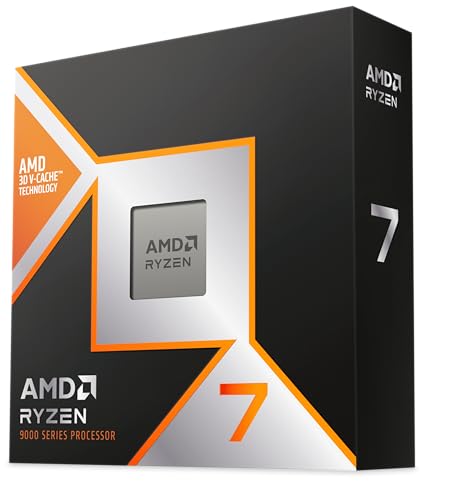
AMD Ryzen 7 9800X3D
ADVANTAGES
LIMITATIONS
The AMD Ryzen 7 9800X3D isn’t just the best gaming CPU—it’s a quantum leap in gaming performance, combining Zen 5 architecture with next-gen 3D V-Cache to deliver the world’s fastest gaming experience. With 8 cores, 16 threads, and 96 MB of L3 cache, it achieves a ~16% IPC uplift over its predecessor, translating to buttery-smooth frame rates in even the most demanding titles. A 5.2 GHz max boost clock and improved thermal design allow higher sustained speeds, eliminating the clock-speed penalty that once plagued 3D V-Cache chips—making this a perfect fusion of cache and clock.
In real-world gaming, the 9800X3D dominates at 1080p and 1440p, outpacing both the 7800X3D and 9900X in titles like Cyberpunk 2077 and Alan Wake 2, where memory latency is king. Its AM5 socket compatibility ensures PCIe 5.0 and DDR5-6000+ support, making it a future-proof anchor for high-end builds. However, its lack of a bundled cooler and premium price tag mean you’ll need to invest in robust cooling to unlock its full potential. And while it’s a gaming monster, its 8-core limit can show in hybrid workloads like streaming + gaming at 4K.
When compared to the Ryzen 9 9900X, the 9800X3D trades multi-threaded muscle for pure gaming supremacy, proving that in gaming, cache often beats core count. It’s the ideal choice for hardcore gamers who want every last frame without compromise. While the 9900X offers more for productivity, the 9800X3D delivers the highest gaming FPS on the market, making it the undisputed king of the AM5 gaming throne.
AMD Ryzen 5 7600X
ADVANTAGES
LIMITATIONS
The AMD Ryzen 5 7600X is the gateway drug to AM5, offering a taste of next-gen performance at a digestible price. Built on 5 nm Zen 4 architecture, it packs 6 cores, 12 threads, and a 5.3 GHz boost clock, delivering snappy 1080p gaming performance and solid responsiveness in everyday tasks. With 38 MB of total cache and support for DDR5 and PCIe 5.0, it’s designed to be the foundation of a modern, future-ready build—perfect for gamers who want to step into the AM5 ecosystem without overspending.
In practice, the 7600X crushes esports titles and holds its own in AAA games, especially when paired with fast DDR5 memory. Its integrated Radeon graphics offer basic display output for troubleshooting, though a discrete GPU is required for gaming. However, its aggressive power delivery needs and high operating temps demand a good air cooler or AIO—something not included. And while it’s fast, it’s often outpaced by the newer 9600X in both IPC and efficiency, making it feel slightly outdated despite its capabilities.
Against the Ryzen 5 9600X, the 7600X loses on architecture and efficiency, lacking the Zen 5 improvements that boost frame consistency and power management. Still, for those who found a deal on a B650 motherboard bundle, it remains a capable AM5 starter CPU. It’s not the fastest or smartest choice today, but for early AM5 adopters, it was the first step into a brighter, faster future—just one now surpassed by newer silicon.
AMD Ryzen CPU Comparison for Gaming
| Product | Architecture | Cores/Threads | Max Boost Clock (GHz) | Cache (MB) | Socket | Integrated Graphics | Cooler Included | Best For |
|---|---|---|---|---|---|---|---|---|
| AMD Ryzen 7 9800X3D | Zen 5 | 8/16 | 5.2 | 128 (96 L3 + 32 L2) | AM5 | No | No | Best Overall |
| AMD Ryzen 5 9600X | Zen 5 | 6/12 | 5.4 | 74 (38 L3 + 36 L2) | AM5 | No | No | Best Budget Friendly |
| AMD Ryzen 7 7800X3D | Zen 4 | 8/16 | 5.0 | 104 (96 L3 + 8 L2) | AM5 | AMD Radeon | No | Best for 3D V-Cache Gaming |
| AMD Ryzen 9 9900X | Zen 5 | 12/24 | 5.6 | 98 (76 L3 + 22 L2) | AM5 | No | No | Best for High-Core Gaming |
| AMD Ryzen 7 5700X | Zen 3 | 8/16 | 4.6 | 36 | AM4 | No | No | Best Value AM4 Upgrade |
| AMD Ryzen 5 5500 | Zen 3 | 6/12 | 4.2 | 19 | AM4 | No | Yes (Wraith Stealth) | Best Budget with Cooler |
| AMD Ryzen 5 7600X | Zen 4 | 6/12 | 5.3 | 64 (32 L3 + 32 L2) | AM5 | AMD Radeon | No | Best for AM5 Entry |
How We Test & Analyze AMD Ryzen CPUs for Gaming
Our recommendations for the best AMD Ryzen CPU for gaming aren’t based on speculation. We prioritize data-driven analysis, leveraging extensive benchmark databases and independent reviews from reputable hardware sites like TechPowerUp, GamersNexus, and Hardware Unboxed. We meticulously compare Ryzen processor performance across a wide range of current and popular game titles at various resolutions (1080p, 1440p, and 4K) to establish real-world gaming capabilities.
Beyond synthetic benchmarks, we analyze frame time consistency – a critical metric for smooth gameplay. We also evaluate the impact of AMD’s technologies, such as 3D V-Cache, on gaming performance, noting improvements in latency and average FPS. This includes comparative analyses against competing CPUs from Intel. We consider the CPU’s core count, thread count, clock speeds, and cache size (L3 cache being a key gaming performance indicator) alongside the total platform cost – factoring in motherboard and RAM compatibility (AM4 vs. AM5) – to determine the best value proposition for different budgets. Data from user forums and community testing further informs our assessments.
Choosing the Right AMD Ryzen CPU for Gaming
Core Count and Threads
The number of cores and threads a Ryzen CPU has significantly impacts its gaming performance, especially in modern titles that can leverage multiple cores. For most gamers, a 6-core/12-thread processor (like the Ryzen 5 9600X or 7600X) offers an excellent balance of price and performance. These are ideal for smooth gameplay in the majority of games. However, if you frequently stream, record gameplay, or run other demanding applications while gaming, consider 8 cores/16 threads (Ryzen 7 9800X3D, 7800X3D, or 5700X) or even 12 cores/24 threads (Ryzen 9 9900X) for improved multitasking capabilities. More cores doesn’t always mean better gaming performance, but provides headroom for other tasks.
Cache Size: L3 is King for Gaming
Cache memory acts as a quick access point for frequently used data, and a larger cache can significantly boost gaming performance. AMD’s 3D V-Cache technology is a standout feature. CPUs like the Ryzen 7 9800X3D and Ryzen 7 7800X3D boast a substantial 96MB of L3 cache. This massive cache drastically reduces latency and improves frame rates, particularly in games that are sensitive to memory access times. While a smaller cache (like the 32MB on the Ryzen 5 7600X) is still adequate, the larger cache CPUs generally offer a noticeable advantage in gaming.
Clock Speed and Boost Clocks
Clock speed, measured in GHz, represents how many cycles the CPU can execute per second. Higher clock speeds generally translate to faster performance. Ryzen processors also feature “Boost Clocks” – the maximum speed the CPU can reach under ideal conditions. The Ryzen 5 9600X and Ryzen 9 9900X offer impressive boost clocks (5.4 GHz and 5.6 GHz respectively). However, clock speed isn’t the whole story. Architecture plays a crucial role, and a CPU with a more efficient architecture can outperform one with a higher clock speed but older design.
Socket Compatibility & Platform Cost
AMD Ryzen CPUs come in different socket types (AM4 and AM5). The Ryzen 7 5700X and Ryzen 5 5500 use the older AM4 socket, which is more affordable as motherboards are readily available and generally cheaper. However, AM4 is a mature platform with limited upgrade paths. The newer Ryzen 5 9600X, 7600X, 7800X3D, 9800X3D and 9900X utilize the AM5 socket, supporting the latest technologies like DDR5 RAM and PCIe 5.0. AM5 provides a longer upgrade path, but requires a new motherboard and potentially new RAM, increasing the overall system cost.
Integrated Graphics
Some Ryzen CPUs (like the Ryzen 5 7600X and Ryzen 7 7800X3D) include integrated Radeon graphics. While not powerful enough for high-end gaming, these integrated graphics can be useful for basic display output or as a temporary solution if your dedicated graphics card fails. If you plan to use a dedicated graphics card (which is essential for serious gaming), the presence of integrated graphics is less of a concern.
The Bottom Line
Ultimately, the best AMD Ryzen CPU for gaming depends on your budget and needs. For those seeking a high-end experience without compromise, the Ryzen 7 9800X3D delivers outstanding performance across the board. However, excellent gaming is achievable at all price points with AMD’s diverse lineup.
Whether you’re building a brand-new system or upgrading an existing one, carefully consider your gaming habits and overall budget. Factoring in platform costs alongside CPU capabilities will ensure you get the most impactful gaming experience possible from your investment.