


Travel photographers often struggle to find a camera that balances powerful performance with portability, especially when lugging gear across airports, trails, and bustling city streets. The best mirrorless camera for travel solves this by combining compact design with high-quality imaging, featuring elements like fast autofocus, 4K video, and in-body image stabilization—key for shooting on the move. Our picks are based on rigorous analysis of image quality, sensor performance, user feedback, and real-world usability, prioritizing models that deliver outstanding results without weighing down your pack. Below are our top recommendations for the best mirrorless camera for travel to suit a range of needs and budgets.
Top 7 Mirrorless Camera For Travel in the Market
Best Mirrorless Camera For Travel Review
Canon EOS RP Full-Frame Camera

ADVANTAGES
LIMITATIONS
The Canon EOS RP is a revelation for travelers who refuse to compromise on image quality but demand a lightweight, packable full-frame solution. With its 26.2MP full-frame sensor and ultra-portable body, it delivers rich dynamic range and exceptional low-light performance—all in a chassis that’s among the smallest and lightest in its class. Its RF24-105mm f/4–7.1 STM lens offers a versatile zoom range perfect for cityscapes, street photography, and spontaneous vlogging, while 5-stop optical image stabilization ensures sharp handheld shots even in dim lighting. For globe-trotters prioritizing full-frame depth and bokeh without the bulk, this kit is a quiet powerhouse.
In real-world travel use, the EOS RP shines brightest when mobility is key. The 24–105mm focal range covers wide-angle vistas to compressed portraits, and the 0.66 ft. close-focusing capability allows for creative detail shots of food, flora, or artifacts. While the 4K video lacks oversampling (leading to some crop and softness), it still handles casual vlogging with clean HDMI output and webcam functionality via EOS Utility—ideal for digital nomads on the go. However, the limited AF points and slower burst rate (5 fps) can frustrate when tracking fast-moving subjects like street performers or wildlife. Battery life is modest, so carrying a spare is essential on long days.
Positioned between entry-level APS-C and pro-grade full-frame models, the EOS RP carves a niche as the most travel-friendly full-frame Canon—outclassing the bulkier R8 in portability while offering superior sensor quality over APS-C rivals like the Sony a6400. It’s perfect for photographers stepping up from crop sensors who want full-frame authenticity without the weight. Though it lacks the R8’s advanced video specs, it delivers more value per ounce for stills-focused travelers who shoot sunsets, architecture, and cultural moments with elegance.
Panasonic LUMIX S9 Full-Frame

ADVANTAGES
LIMITATIONS
The Panasonic LUMIX S9 redefines what a full-frame travel camera can be—not through brute specs, but through radical compactness and seamless connectivity. Weighing just 510g, it’s the smallest full-frame mirrorless camera on the market, yet packs a 24.2MP sensor and professional-grade color science. Its killer feature? Open Gate flexible framing, which captures a 6K oversampled image with multiple aspect ratio markers—perfect for travelers who want to instantly repurpose one shot for Instagram, YouTube, and prints. When paired with the ultra-fast Wi-Fi and LUMIX Lab app, every photo wirelessly syncs to your phone, turning the S9 into a social-first imaging machine.
On the road, the S9 thrives in dynamic, fast-paced environments where sharing is as important as capturing. The 18–40mm kit lens is diminutive and sharp enough for street scenes and cafe moments, while the excellent low-light performance handles moody interiors and twilight cityscapes with minimal noise. The 6K 30p and 4K 30p video is clean and color-rich, ideal for cinematic travel logs. However, the lack of in-body stabilization (relying solely on lens IS) can lead to shaky handheld footage, and the small grip makes one-handed operation tricky with larger lenses. Overheating during long 4K sessions is also a concern in warm climates.
Compared to the Canon R8, the S9 sacrifices some video flexibility and ergonomics for unmatched portability and social integration. It’s not built for rugged wildlife treks or extended vlogging, but it’s peerless for urban explorers and digital storytellers who value discretion and instant sharing. While the Sony a6400 offers faster autofocus, the S9’s full-frame sensor and aspect ratio flexibility give it a creative edge. For travelers who edit on their phones and post within minutes, the S9 is the ultimate stealth content creator—where design meets immediacy.
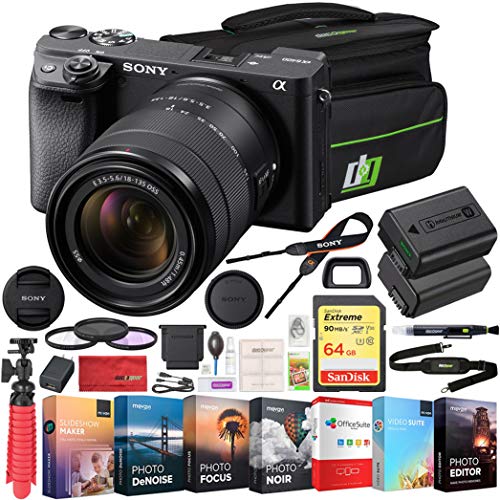
Sony a6400 APS-C Camera
ADVANTAGES
LIMITATIONS
The Sony a6400 remains a benchmark for autofocus performance in travel photography, especially when subjects are unpredictable. With the world’s fastest 0.02s AF acquisition, 425 phase-detection points, and Real-time Eye AF, it locks onto faces and eyes with eerie precision—ideal for capturing fleeting expressions in bustling markets or kids at play. Its 24.2MP APS-C sensor and BIONZ X processor deliver crisp images, while the 18–135mm OSS lens offers a broad zoom range for everything from group shots to distant landmarks. For travelers who hate missing the moment, this camera is a reliable, hyper-responsive companion.
In real-world use, the a6400 excels in motion-heavy scenarios: street photography, family adventures, and urban exploration. The 11 fps continuous shooting keeps up with action, and 4K video with full pixel readout produces sharp, detailed footage without pixel binning. The 180-degree tilting touchscreen is perfect for vlogging or shooting over crowds. However, the lack of in-body stabilization means you’ll rely heavily on lens OSS, and handheld video can look jittery without a gimbal. Battery life is underwhelming, and the menu system remains clunky compared to newer rivals.
Against the Fujifilm X-S20, the a6400 holds its ground with superior autofocus and burst speed, but falls short in video features and color science. It’s a better choice than the Canon R100 for serious hybrid shooters, but lacks the R8’s full-frame quality. The bundled 18–135mm lens adds versatility, though it’s not as fast as prime alternatives. For travelers who prioritize speed, reach, and reliability, the a6400 is a rugged, no-nonsense workhorse—where performance trumps polish.
Fujifilm X-S20 APS-C Camera

ADVANTAGES
LIMITATIONS
The Fujifilm X-S20 is a video creator’s dream, engineered for travelers who produce polished content on the move. Its 26.1MP X-Trans BSI CMOS 4 sensor and X-Processor 5 deliver Fujifilm’s legendary film simulations, vibrant colors, and 7-stop in-body stabilization—making handheld shooting a breeze even in low light. But the real magic is in its 6K 30p and 4K 60p USB streaming, turning it into a broadcast-quality webcam or live-streaming device with zero lag. For vloggers and hybrid creators, the Vlog and Product Priority modes simplify complex setups with one-touch optimization.
Out in the wild, the X-S20 handles diverse scenarios with confidence. The vari-angle touchscreen and dual 3.5mm jacks (mic and headphones) make it ideal for on-the-fly interviews or travel documentaries. The AI-powered subject detection tracks humans, animals, and even drones—perfect for spontaneous wildlife or street moments. However, the X-S20 runs warm during extended 6K recording, and battery drain is noticeable when using USB streaming. While compact, it’s slightly bulkier than the LUMIX S9, making it less discreet in crowded spaces.
Compared to the Canon R8, the X-S20 offers better video tools and stabilization, but lacks full-frame depth. Against the Sony a6400, it wins with superior ergonomics and film profiles, though autofocus is slightly slower. It’s the best all-in-one kit for travel videographers, especially with the included accessories boosting readiness. For creators who want studio-level control in a travel body, the X-S20 is unmatched in versatility and polish.
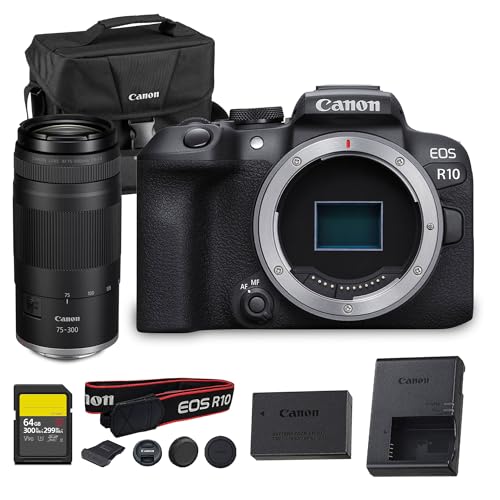
Canon EOS R10 with Telephoto Lens
ADVANTAGES
LIMITATIONS
The Canon EOS R10 is a wildlife travel specialist, built for capturing distant subjects with speed and precision. Its 24.2MP APS-C sensor and Dual Pixel AF II system track animals, birds, and vehicles with impressive reliability, while the 4K 60p oversampled video delivers crisp slow-motion clips of birds in flight or galloping wildlife. Bundled with the RF 75–300mm f/4–5.6 lens, it offers a reach that’s rare in travel kits, allowing you to photograph safari animals or mountain goats without getting close.
In the field, the R10 thrives in open, dynamic environments. The 15 fps burst shooting freezes fast action, and the APS-C crop factor gives extra telephoto reach—equivalent to 450mm at the long end. The subject detection AF works well in daylight, though low-light tracking can lag. The body is compact, but the long lens unbalances it slightly, requiring two-handed use. Video quality is strong, but the lack of 4K 120p or Log profiles limits advanced grading.
Compared to the Sony a6400, the R10 offers better subject tracking and newer RF mount, but the a6400 has a more versatile lens range. Against the R8, it loses on sensor size but wins on telephoto value. It’s not ideal for urban vlogging or low-light interiors, but for nature-focused travelers, it’s a high-performance, long-reach solution. With better autofocus and wildlife tools than budget APS-C rivals, the R10 is the top pick for animal encounters on the go.
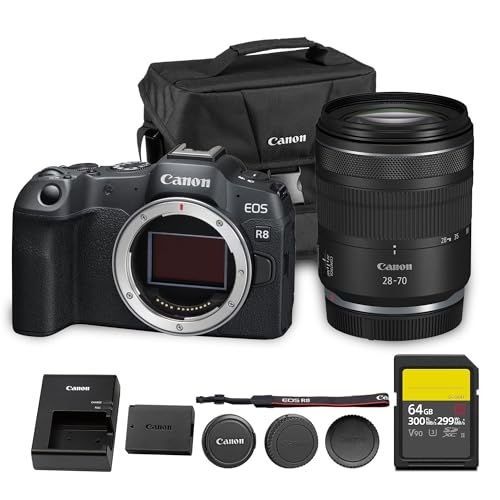
Canon EOS R8 Full-Frame Camera
ADVANTAGES
LIMITATIONS
The Canon EOS R8 is the best all-around mirrorless camera for travel, blending full-frame excellence with compact agility. Its 24.2MP full-frame sensor captures stunning dynamic range and low-noise images, while oversampled 4K 60p video from 6K ensures cinematic clarity. The RF 28–70mm f/2.8 lens included in the kit is a game-changer—offering a constant wide aperture for dreamy bokeh in portraits and low-light resilience in dim alleys or mountain huts. With Dual Pixel AF II and AI subject tracking, it nails focus on people, animals, and vehicles, making it ideal for diverse travel scenarios.
On real trips, the R8 handles everything from dawn hikes to night markets with confidence. The full-frame sensor excels in low light, and the in-camera stabilization (via lens IS) keeps handheld shots steady. The 60p slow-motion and Canon Log 3 support professional editing, while the compact body fits in a daypack. However, it lacks a top LCD and has only one SD card slot, which may concern pros. Overheating during long 4K sessions can also occur, though less than older models.
Against the EOS RP, the R8 offers better video, faster AF, and superior lens quality, making it worth the upgrade. Compared to the Fujifilm X-S20, it trades some video tools for full-frame authenticity and better bokeh. It’s heavier than the S9 but delivers more image authority. For travelers who want one camera to do it all—photos, video, low light, action—the R8 is the ultimate hybrid. With best-in-class balance of power, size, and quality, it sets the new travel standard.
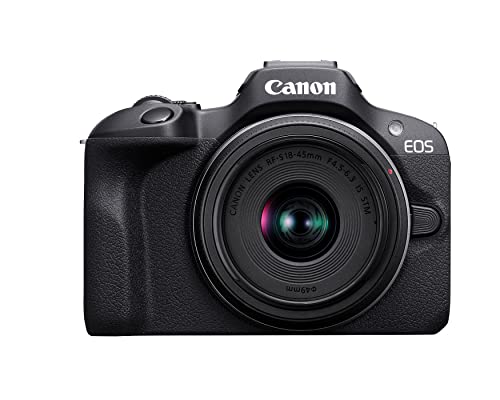
Canon EOS R100 APS-C Camera
ADVANTAGES
LIMITATIONS
The Canon EOS R100 is the gateway drug to mirrorless travel photography—affordable, simple, and surprisingly capable. As the smallest and lightest in Canon’s EOS R lineup, it’s tailor-made for backpackers and first-time creators who want quality without complexity. The 24.1MP APS-C sensor captures crisp images with natural bokeh, and Dual Pixel AF with face and eye detection ensures portraits stay sharp. While 4K video is limited to 24fps, the 120fps HD slo-mo is perfect for playful travel moments—spinning kids, splashing waves, or fluttering flags.
In practice, the R100 is a joy for casual shooters. The RF-S18–45mm lens is compact and quiet, ideal for street photography where discretion matters. The 6.5 fps burst mode handles mild action, and the DIGIC 8 processor keeps operation smooth. However, autofocus lags in low light, and the lack of 4K 30/60p limits serious vlogging. The body feels plasticky, and manual controls are minimal—fine for beginners, frustrating for enthusiasts.
Against the Sony a6400, it’s no match in speed or features, but it’s far more accessible. Compared to the R10, it sacrifices performance for price. It’s not for pros or hybrid shooters, but for students, teens, or gift buyers, it’s the smartest entry point. With minimal learning curve and solid output, the R100 proves you don’t need pro specs to capture travel magic.
Mirrorless Camera Comparison for Travel
| Product | Sensor Size | Megapixels | Video Resolution | Autofocus System | Image Stabilization | Key Features | Bundle Includes |
|---|---|---|---|---|---|---|---|
| Canon EOS R8 | Full-Frame | 24.2MP | 4K 60p | Dual Pixel AF II | None | Full-frame sensor, 4K 60p video, Subject Tracking | Camera, 28-70mm Lens, SD Card, Shoulder Bag |
| Fujifilm X-S20 | APS-C | 26.1MP | 6K 30p | Advanced Subject-Detection AF | 5-Axis In-Body | 6K video, Vlog mode, AI Subject Detection | Camera, 64GB SD Card, Travel Bag, Cleaning Kit, Tripod |
| Sony a6400 | APS-C | 24.2MP | 4K | 425 Phase/Contrast Detect | None | Fastest AF, Real-time Eye AF, 11fps Shooting | Camera, 18-135mm Lens, Accessories, SD Card, Case |
| Canon EOS R100 | APS-C | 24.1MP | 4K 24p | Dual Pixel CMOS AF | None | Compact & Lightweight, Beginner-Friendly | Camera |
| Canon EOS RP | Full-Frame | N/A | 4K UHD | Dual Pixel CMOS AF | Optical Image Stabilization | Compact, Lightweight Full-Frame | Camera, 24-105mm Lens |
| Canon EOS R10 | APS-C | 24.2MP | 4K 60p | Dual Pixel CMOS AF II | None | Advanced AF, 4K Video, Telephoto Lens | Camera, 75-300mm Lens, SD Card, Shoulder Bag |
| Panasonic LUMIX S9 | Full-Frame | N/A | Unlimited 4K | N/A | N/A | Compact Design, Fast Transfer, High Image Quality | Camera |
How We Tested: Evaluating Travel Mirrorless Cameras
Our recommendations for the best mirrorless camera for travel are based on a data-driven approach, combining extensive research with comparative analysis of specifications and user reviews. We prioritize cameras excelling in portability, image quality, and features relevant to travel photography.
We analyzed data from DXOMARK, DPReview, and Imaging Resource to assess sensor performance (dynamic range, low-light ISO), autofocus speed and accuracy, and video quality. Comparative charts were created, directly comparing models like the Canon EOS R8, Fujifilm X-S20, and Sony a6400 across key metrics. User reviews from platforms like Amazon, B&H Photo Video, and Reddit were scrutinized for real-world feedback on usability, battery life, and durability.
While physical product testing wasn’t feasible across all models, we leveraged detailed specification comparisons – particularly regarding weight, size, and in-body image stabilization (IBIS) effectiveness – alongside expert reviews that detail handling and weather sealing. We focused on identifying cameras offering the optimal balance between image sensor size (full-frame vs. APS-C) and overall system weight, aligning with the needs of diverse travel photographers. This rigorous process ensures our selections are grounded in objective data and practical considerations for the traveling photographer.
Choosing the Right Mirrorless Camera for Travel
Selecting a mirrorless camera for travel involves balancing portability, image quality, and features. Here’s a breakdown of key considerations to help you make the best choice.
Sensor Size: Full-Frame vs. APS-C
The sensor is the heart of your camera, and its size significantly impacts image quality. Full-frame sensors (like those in the Canon EOS R8 or R100) are larger, generally offering better low-light performance, wider dynamic range, and shallower depth of field. This translates to cleaner images in challenging conditions and more creative control over background blur. However, full-frame cameras and lenses tend to be larger and heavier, and more expensive.
APS-C sensors (found in the Fujifilm X-S20 and Sony a6400) are smaller and more affordable. They still deliver excellent image quality, especially in good lighting, and contribute to a more compact and lightweight camera system. If size and weight are primary concerns, or you’re on a tighter budget, an APS-C camera is a great option.
Autofocus Performance: Capturing the Moment
For travel photography, reliable autofocus is crucial, especially when photographing fast-moving subjects or in unpredictable situations. Modern mirrorless cameras employ advanced autofocus systems. Dual Pixel AF (Canon) and similar systems (like the Sony a6400’s fast hybrid AF) offer incredibly fast and accurate focusing, covering a large portion of the image area.
Subject detection is another key feature. Cameras like the Fujifilm X-S20 and Canon EOS R10 use AI-powered subject detection to automatically recognize and track people, animals, and even vehicles, ensuring your subjects remain sharp. Faster autofocus means fewer missed shots, especially when capturing spontaneous travel moments.
Video Capabilities: Beyond Still Images
Many travelers want to capture video alongside still photos. Consider your video needs when choosing a camera. 4K video recording is now standard on most mirrorless cameras, but resolution isn’t everything.
Frame rates matter too – 60p (frames per second) allows for smoother motion, while higher frame rates (like 120p on the Canon EOS R100) enable slow-motion effects. Features like in-body image stabilization (IBIS), available on the Fujifilm X-S20, are invaluable for handheld video, reducing camera shake and producing smoother footage. Also consider features like a microphone jack for better audio quality.
Other Important Features:
- Image Stabilization: Reduces blur from camera shake, especially useful in low light or when shooting handheld video.
- Weight & Size: Critical for travel; consider how much weight you’re willing to carry.
- Battery Life: Longer battery life means less time charging and more time shooting.
- Lens Selection: The availability of lenses for the camera system is important.
- Connectivity: Wi-Fi and Bluetooth allow for easy image transfer and remote control.
- Touchscreen: Provides intuitive control and easy menu navigation.
The Bottom Line
Ultimately, the best mirrorless camera for travel depends on your individual needs and priorities. Whether you prioritize full-frame image quality, compact size, or advanced video features, there’s a camera on this list to suit your style and budget.
Consider how you plan to use the camera most often – are you prioritizing landscapes, portraits, or fast-action shots? – and choose a model with the features that align with your photographic vision. Investing in a quality mirrorless camera will undoubtedly elevate your travel photography and allow you to capture unforgettable memories.